




We’ve spent roughly 2,500 years systematically misunderstanding what happiness actually is, and the we’re still getting it wrong, only now we’re doing it with better graphics and free two-day shipping.
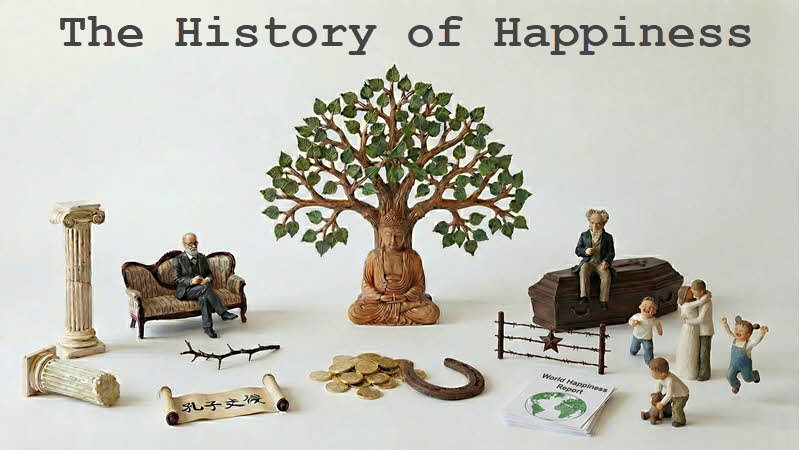
The ancient Greeks, the people who gave us democracy and philosophy, had this concept they called eudaimonia. It’s usually translated as “happiness,” which is like translating “War and Peace” as “Some Stuff Happened.” What they actually meant was something closer to “human flourishing” or “living well” or, if we’re being honest, not being a complete asshole while also actualizing your potential.
Aristotle, that student of Plato‘s who couldn’t just let his teacher have the last word, argued that happiness wasn’t about feeling good. It was about being good. About cultivating excellence. About contributing to society. You achieved eudaimonia through areté, an excellence of character. Which sounds noble until you realize it meant you couldn’t just eat chips and watch Netflix. You had to, like, do things. Meaningful things. Things that helped other people.
What a buzzkill.
But we took this profound philosophical concept and spent the next two millennia turning it into its exact opposite.
Fast forward to 1776. Thomas Jefferson and the boys are drafting the Declaration of Independence, and they write “Life, Liberty, and the pursuit of Happiness” with a capital H. Jefferson was a devotee of Enlightenment philosophy. When he wrote “happiness,” he almost certainly meant it in the eudaimonic sense. The meaningful life, the virtuous life, the life where you contribute to the common good.
Then we invented advertising.
Somewhere between Jefferson’s time and ours, let’s say around the 1950s when advertising became less “here’s a product that exists” and more “here’s the gaping void in your soul that only this product can fill”, we completed the most spectacular philosophical heist in human history. We stole the word “happiness,” gutted it of all meaning, and replaced its insides with the phrase “if only.”
Except “enough” is now a moving target, like trying to grab smoke or understand your health insurance deductible. We got more choices, which we thought would make us happier, but instead made us realize we could always be choosing something else. Some better version of the thing we chose. The grass isn’t just greener on the other side anymore. It’s professionally landscaped with drought-resistant native species and an irrigation system that waters itself.
(I’m writing this on a laptop I bought two years ago that still works perfectly fine, and I’ve spent probably 40 hours thinking about upgrading it. For no reason. Just because a slightly better one exists.)
We know this isn’t working. We’ve got decades of research showing that once your basic needs are met, more money doesn’t really make you happier. We’ve got studies proving that experiences matter more than things, that relationships matter more than achievements, that meaning matters more than pleasure. And yet here we are, collective cart full of things we don’t need, scrolling past lives we don’t want, pursuing a version of happiness that would have made Aristotle weep into his toga.
Viktor Frankl, a Holocaust survivor, figured this out in the worst possible classroom. In the concentration camps, he noticed that the people who survived weren’t necessarily the strongest or the youngest. They were the ones who had something to live for. Some purpose beyond their own survival. Some meaning that transcended the hell they were in.
His big insight, the one that should be tattooed on every minimalist blog and self-help book: “Happiness cannot be pursued; it must ensue.” It’s a byproduct. A side effect. You don’t find happiness by looking for it. You find it by looking for meaning, and happiness shows up uninvited, like a cat that finally decides you’re worthy of its presence.
Think about the last time you felt genuinely happy. Not “I got a package” happy or “it’s Friday” happy, but deeply happy. I’ll bet you weren’t trying to be happy in that moment. You were probably absorbed in something. A conversation, a project, helping someone, creating something. You were present. You were engaged. You forgot to check your phone for like 45 minutes.
The Greeks would call that eudaimonia. Frankl would call it meaning. I’d call it the one thing our entire culture is designed to prevent.
An economy based on consumption needs you to be slightly dissatisfied. Always. If you ever felt like you had enough, you’d stop buying shit, and then where would we be? The entire apparatus of modern capitalism depends on you believing that happiness is just one purchase away. One promotion away. One follower count away.
It’s the same logic that trapped Sisyphus, that Greek guy condemned to push a rock up a hill for eternity, only to watch it roll back down. Except our rock is a shopping cart, and we’ve somehow convinced ourselves that this time, this purchase will be the one that makes it stay at the top.
We’ve taken the most fundamental human question – how do we live a good life? – and outsourced the answer to whatever algorithm is currently optimizing for our engagement. Which is to say: we’ve taken Aristotle’s virtue ethics and replaced it with TikTok.
And look, I’m not saying we should all become ancient Greek philosophers. (Have you seen those sandals?) I’m not even saying consumerism is pure evil. Sometimes you need a new laptop. Sometimes that fancy faucet genuinely improves your life. Sometimes a package arriving does make you happy for 4-7 business days, and that’s okay.
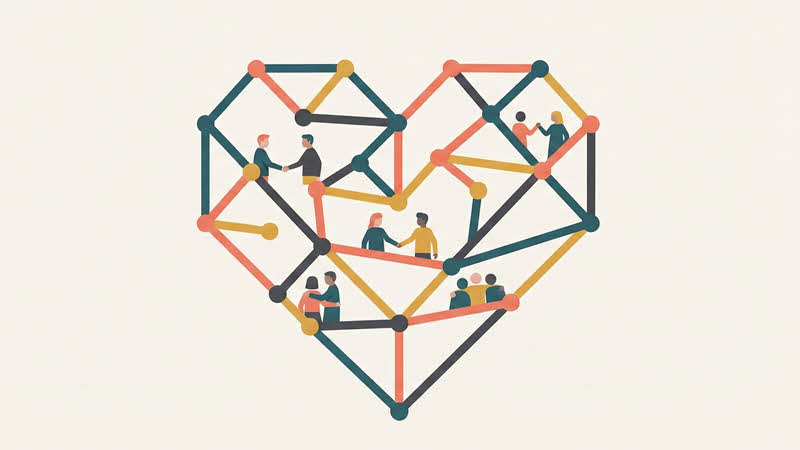
But maybe we could stop pursuing happiness and start pursuing something we can actually catch. Like meaning. Like connection. Like doing something that matters to someone other than ourselves.
Maybe we could reclaim the original definition, the one Jefferson probably meant, the one the Greeks definitely meant. Maybe “the pursuit of happiness” was never supposed to be a solo mission to acquire more and feel better. Maybe it was always supposed to be a collective project of becoming better and contributing more.
Because here’s what I’ve noticed, the moments I’ve felt most alive weren’t the moments I got what I wanted. They were the moments I forgot to want anything at all. When I was so absorbed in something meaningful, a deep conversation, a challenging project, helping someone figure something out, that happiness just sort of showed up like, “oh hey, didn’t see you there.”
Frankl survived Auschwitz by finding meaning in helping other prisoners, in bearing witness, in choosing how to respond to unspeakable suffering. Most of us will never face anything close to that. Which means if we can’t find meaning in our comfortable lives, with our fancy faucets and our two-day shipping and our 47 streaming services, then maybe the problem isn’t that meaning is hard to find.
Maybe the problem is we’ve been looking for the wrong thing entirely.
The Greeks were onto something with their virtue and their excellence and their “don’t be an asshole” philosophy. They understood that happiness isn’t a destination or a purchase or a state of perpetual pleasure. It’s what happens when you’re living well, whatever that means for you, and you’re too busy living to notice you’ve become happy.
So maybe stop chasing it.
Start living toward something that matters. Something beyond yourself. Something that would still matter even if no one was watching or liking or buying.
And then forget you’re doing it for happiness.
Just do it because it’s worth doing.
The happiness will show up later, uninvited, like a cat.
Lämna feedback om detta